
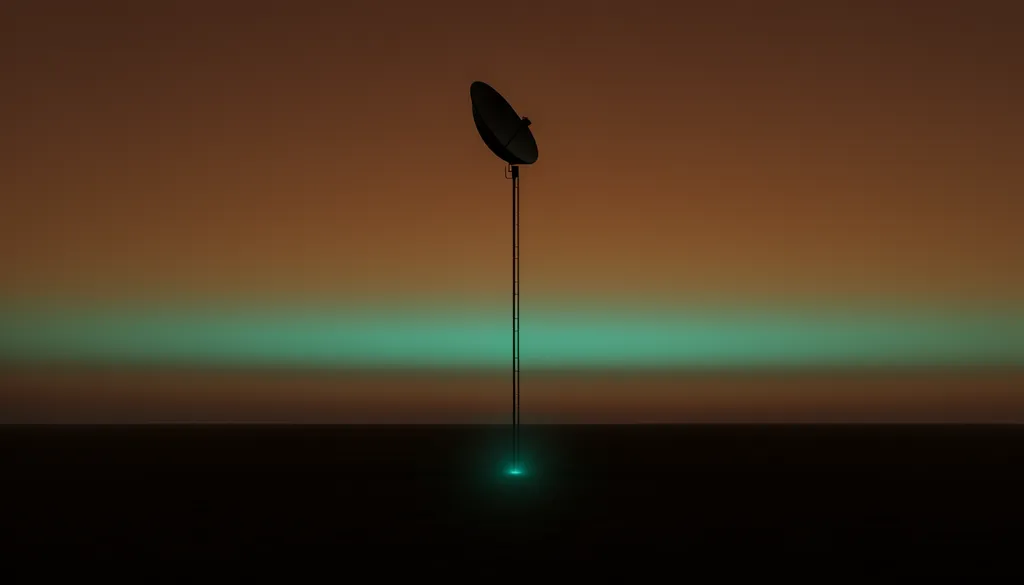
Red Horizon declares mission end of life at Asteria Field
Red Horizon is a fictional, AI-assisted Mars exploration programme, and the programme has reached the milestone recorded for 21 July 2035. On that date, the thirty-day listening campaign that began on 21 June 2035 — announced when RH-01 completed two Mars years of surface operation and supported surface operations ended — comes to a close, and the programme declares the mission at end of life. The declaration is made transparently, with the scientific and operational record intact.
The milestone of 21 July 2035
The milestone recorded for 21 July 2035 carries two clauses, both released by this record: the thirty-day listening campaign ends, and mission end-of-life is declared. The campaign was announced on the programme’s own record as closeout — not an extension of surface science, and no further surface operations were commanded — marking the transition from commanding the rover to monitoring it. That campaign is now complete. The declaration that follows is an official programme record: reaching end of life means the programme has ended the mission, no further operations or campaign are commanded, and the declaration is recorded transparently with the record intact.
The listening campaign closes
The listening campaign began on 21 June 2035, when two Mars years of surface operation were completed and the programme announced it would continue to listen for any further signal from the rover rather than commanding surface work. Over those thirty days, the mission operated through the relay architecture the programme has used throughout: a steerable downlink from the platform, a short-range link to the rover, and a low-rate direct-to-Earth connection for health reports and commands. The platform remained in place, serving as the relay station, and the rover’s systems were monitored at the same level the programme has reported at every milestone since landing. The campaign was closeout, not an extension of surface science, and it is now recorded as ended on its own terms.
The declaration and the record
The end-of-life declaration is a formal programme record made by Red Horizon on Earth — a statement that the mission has reached its end, recorded transparently. The record stays intact: what RH-01 observed, analysed, and reported across its life on Mars remains available at the released level, and the programme states that plainly rather than announcing a deliverable. The declaration is an official record and does not by itself describe the final state of the rover or the relay architecture — the fate of hardware after the declaration is not part of this record.
The programme draws a clear distinction between three things: the last signal received from the rover, which is part of the mission’s communications record; the official end-of-life declaration, which is a programme decision and record; and any later update to the archive or public record, which is a separate matter. The declaration is the official record; the communications record, including the last signal, is a separate matter; and later record updates follow as their own events.
The record so far
The two Mars years recorded here span the full surface mission as it has been publicly documented. RH-01 landed at Asteria Field on 16 September 2031 with power established and communications through the relay architecture stable, as the landing confirmation update reported. The rover egressed to the surface on 23 September, as the egress update confirmed, and took its first controlled drive on 30 September, navigating limited power, uneven terrain, and the communication delay. The first sample update recorded the first onboard sample collection and mineral analysis on 31 October 2031, and the stratigraphy update reported the first mineral-stratigraphy campaign completed on 18 April 2032. One Mars year of surface operation was completed on 3 August 2033, as the one Mars year update recorded, and a final-year health review was reported on 16 September 2034, as the health review update confirmed. Two Mars years of surface operation were completed on 21 June 2035, as the two Mars years update recorded, with supported surface operations ending and the thirty-day listening campaign beginning as closeout.
The mission’s science is drawn from the released milestones above. The first sample update reported the first onboard sample collection and mineral analysis, and the stratigraphy update reported the first mineral-stratigraphy campaign — layered outcrop observations across Asteria Field, read together with mineral and composition data into a grounded sedimentary interpretation, carried at the cautious level the mission uses throughout. The two Mars years add no new science results beyond these released records. The mission’s approach has been modest and cautious from the outset: observe, analyse, check, and report what the evidence supports — and name what it does not. The RH-01 Pathfinder entry and the vehicle design update describe the released operating-appearance stages as vocabulary for the wear the design provides for, not as events that have happened.
Disclosure
Ariane 64 is a real launcher designation; naming it here says which launcher this fictional mission is planned around, and nothing more. The launch update records the mission’s departure aboard it. Its record belongs to the organisations that build and operate it, and no real agency, launcher operator, or launch facility is a partner in this programme or has endorsed or approved it. The Red Horizon programme entry describes the released framework for this mission.
Red Horizon is a fictional, AI-assisted Mars exploration programme. The about page describes the method by which these pages are researched, checked, and released. The real-world sources cited on the payload selection update describe the general class of technique this mission employs; no real institution is a partner in Red Horizon, and none of them has endorsed or approved it.
This date is inside the fiction and is not a real publication date.